What six interviews revealed
Users wanted earlier warnings, understandable reporting, and specific steps to resolve bad contacts instead of trial-and-error cleanup.
Selected work, by invitation.
Enter the portfolio password to view this project.
Back to selected workKeap / Thryv / R&D
Turning an opaque email-health report into a clear score and useful next steps. A one-sprint exploration of deliverability, engagement, and complaints inside the existing CRM.
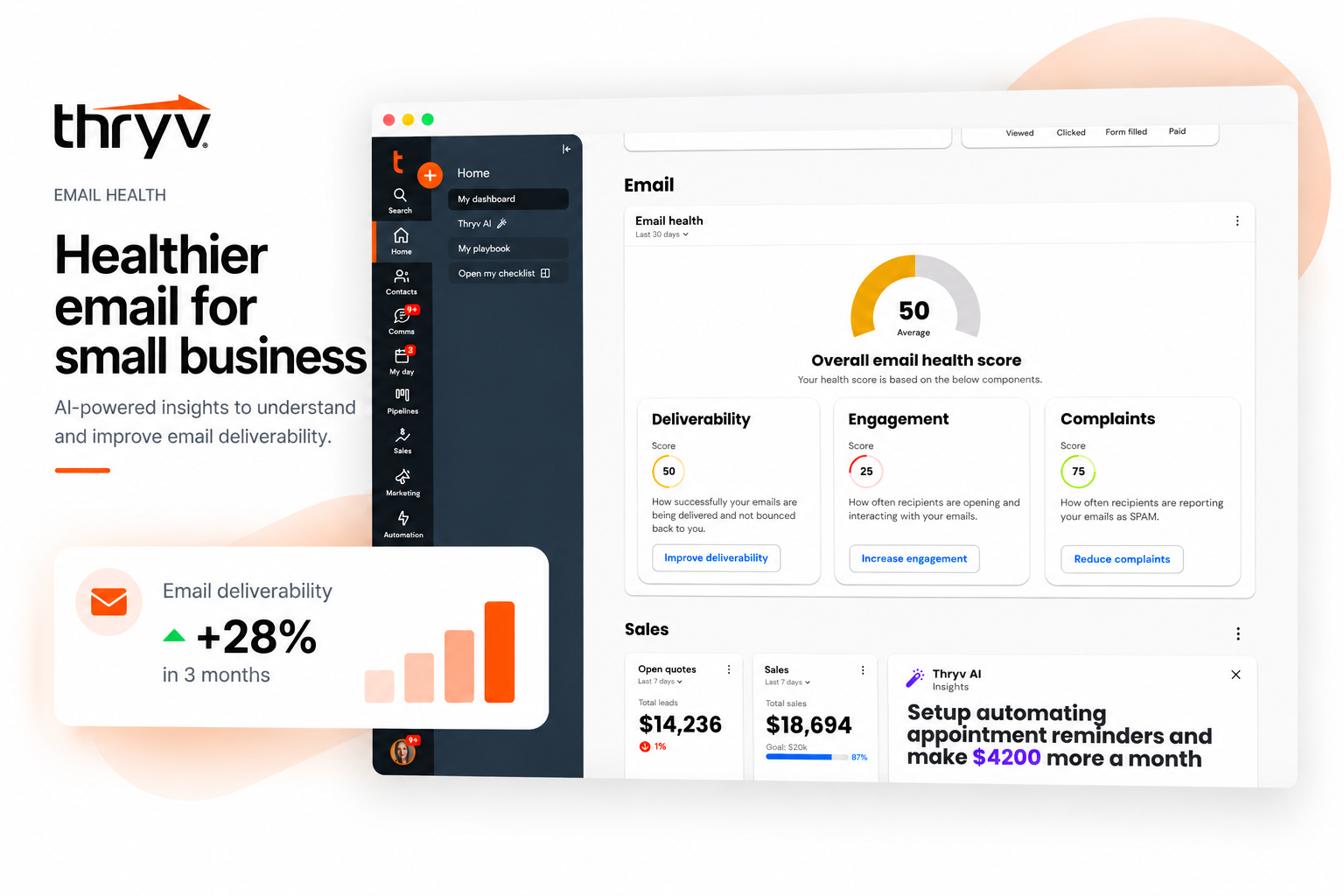
I used six user interviews and competitive research to design the widget, report, and assistant concepts. In a workshop with product, research, content, and customer success, we narrowed the scope to helping users understand problems and take action. The work remains a prototype.
Discovery
Campaign suspensions, unclear bounce warnings, and manual list cleanup left users dependent on support. The existing experience scored 48.8 SUS in baseline testing.
Users wanted earlier warnings, understandable reporting, and specific steps to resolve bad contacts instead of trial-and-error cleanup.
Combine clearer diagnostics with proactive guidance as Keap and Thryv move toward a unified platform.
I wish the system gave me a heads-up.
User interview
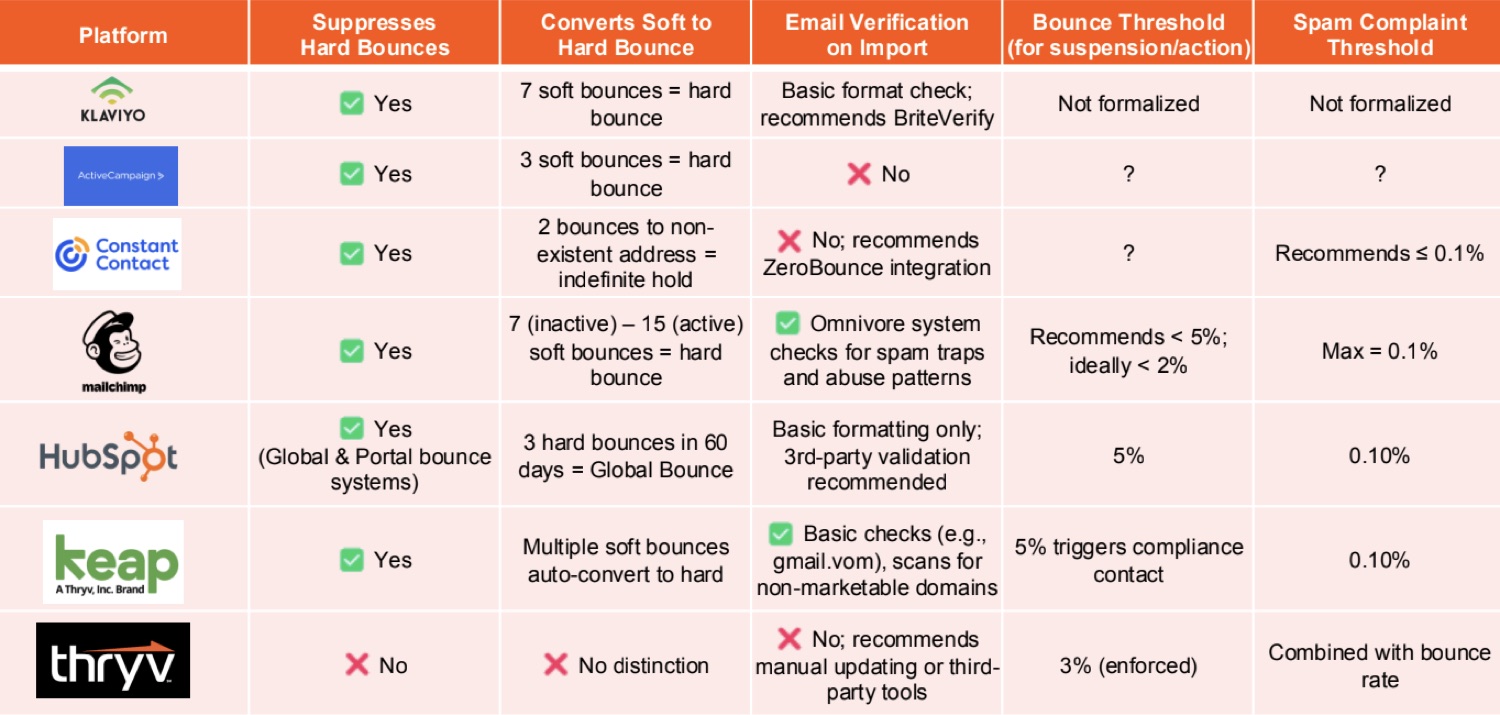
Competitive analysis examined suppression, bounce thresholds, and verification to understand where the current experience left users exposed.
Process
A cross-functional workshop with design, research, product, content, and customer success focused the MVP on insight, guidance, and control.
Use a 0-100 score as an entry point, then explain what contributes to it rather than leaving the number on its own.
Deliverability explains inbox reach, Engagement explains recipient interaction, and Complaints explains negative feedback.
Pair warnings with cleanup or improvement actions so users can respond without leaving their day-to-day CRM work.
Product Design
The widget offers an at-a-glance view. The report provides category breakdowns, trends, and contextual recommendations for a deeper investigation.
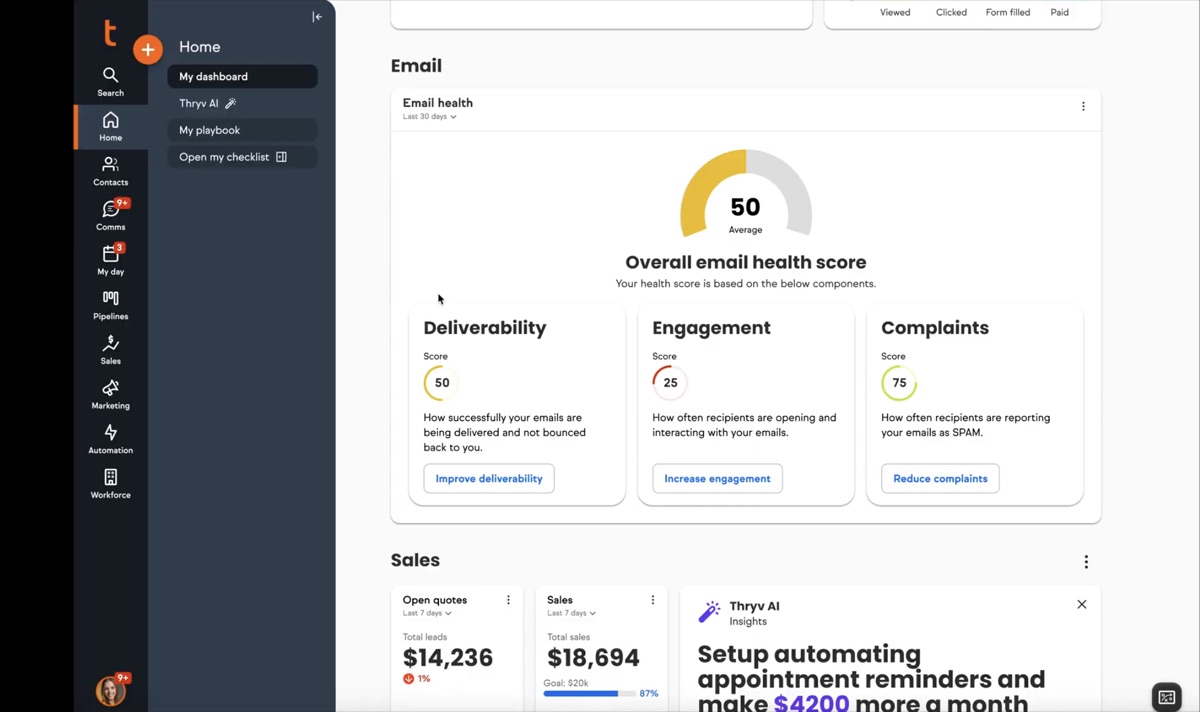
The redesign groups key metrics and places resolution actions beside the information that motivates them.
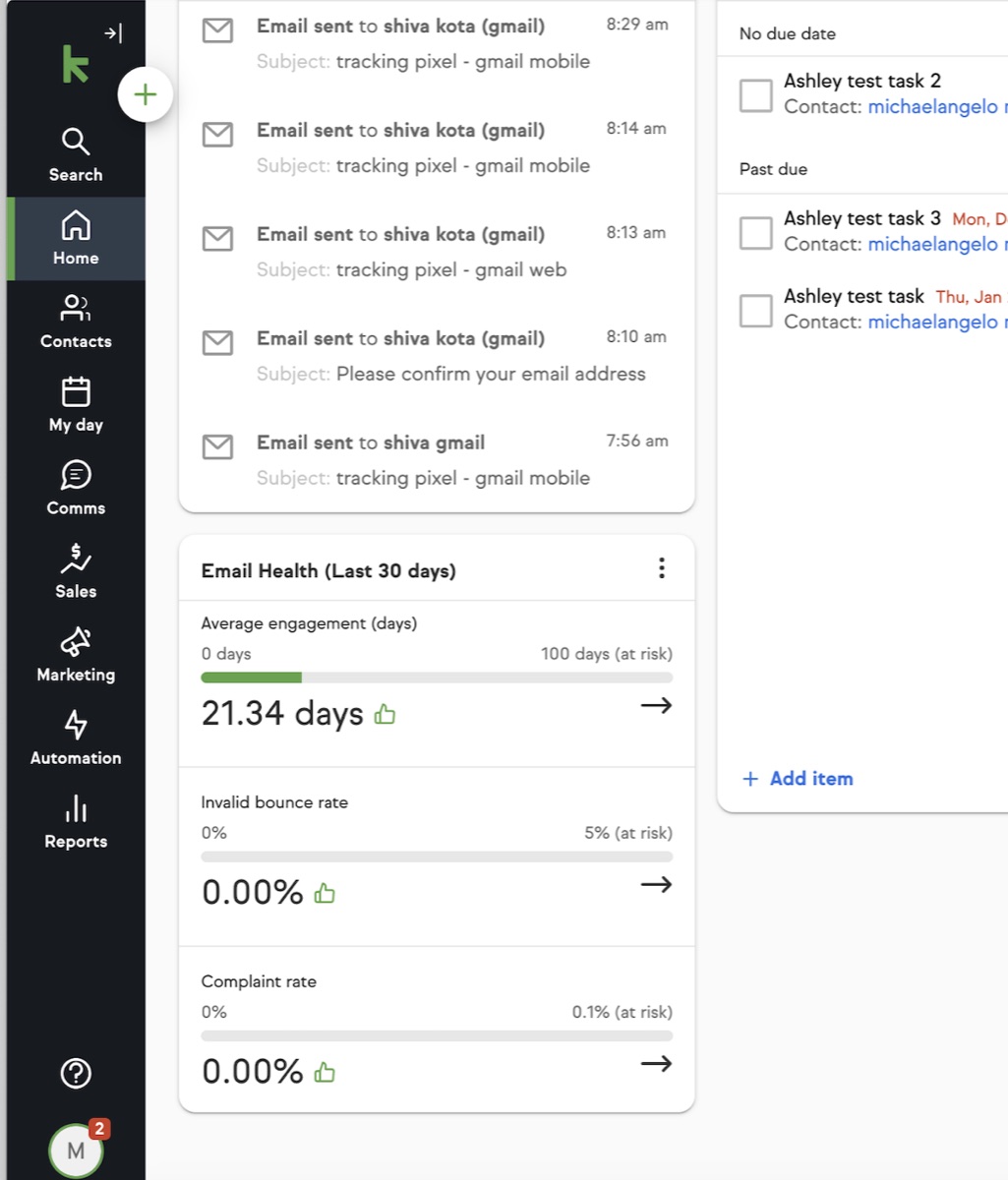
Ambiguous metrics and weak hierarchy made it difficult to judge health or know what to do next.
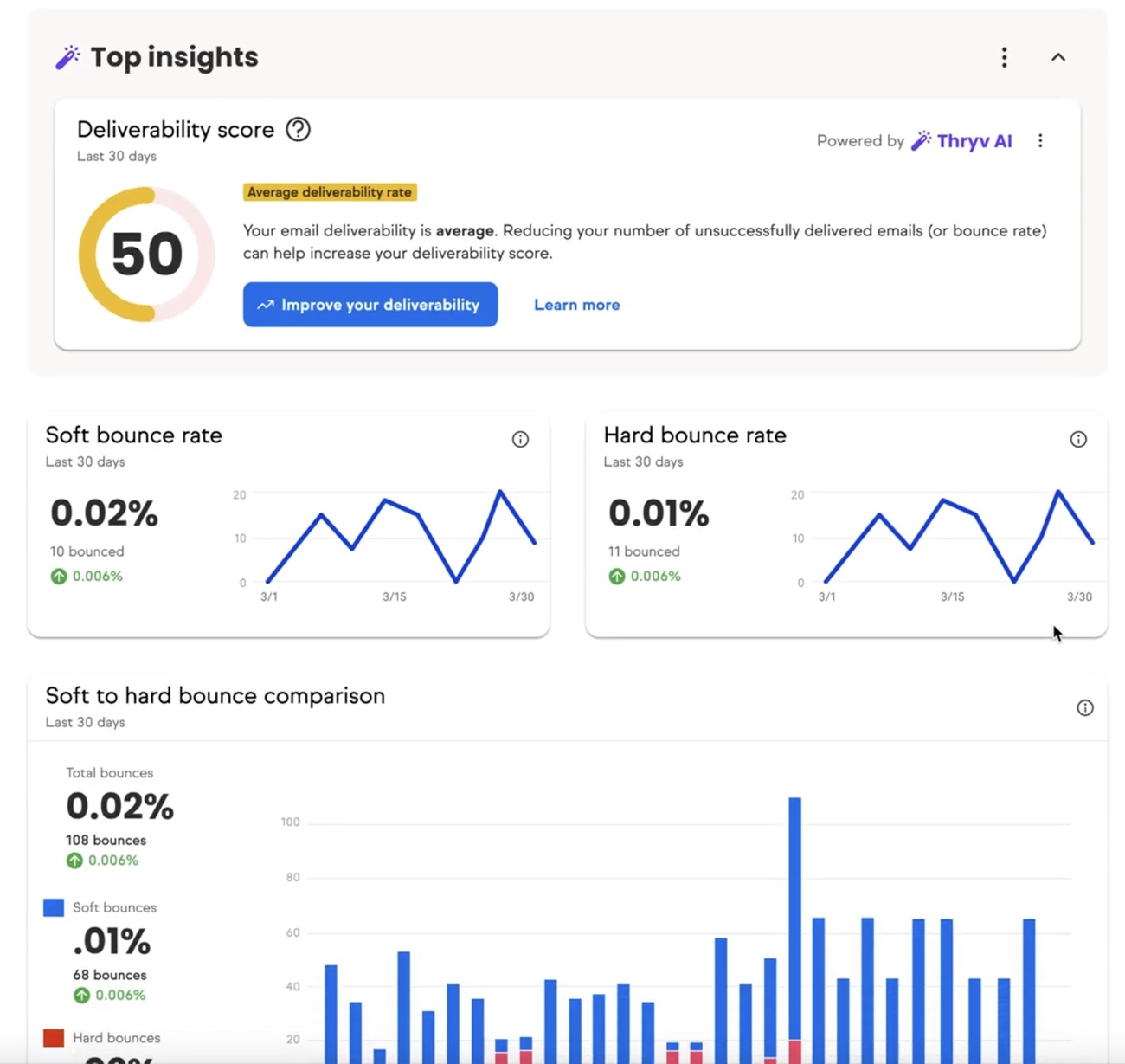
The proposed report makes the score prominent and adds trends, bounce breakdowns, and AI-powered guidance.
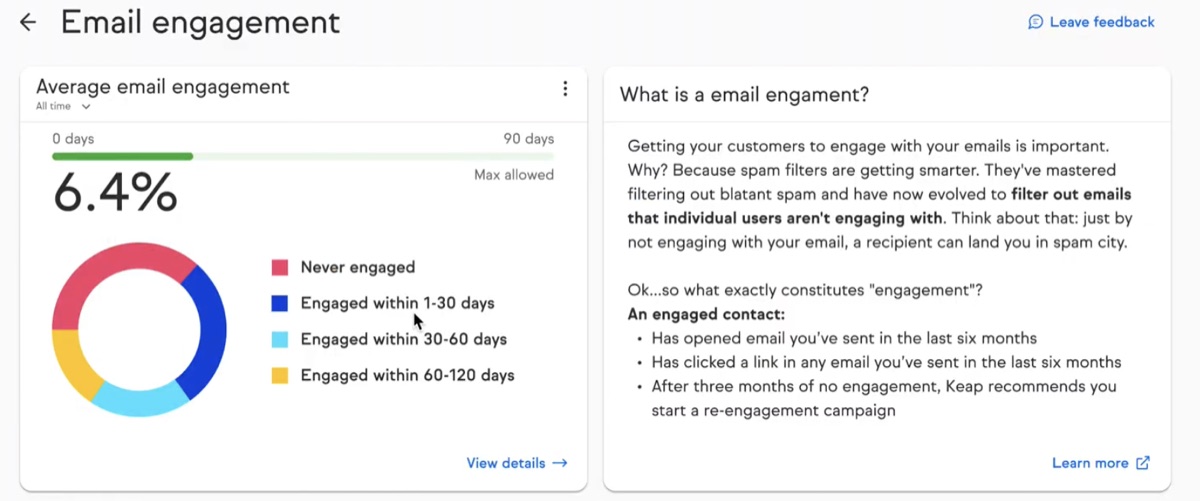
Text-heavy explanations and buried actions made the original report harder to use.
A prototype walkthrough shows how health information and recommendations fit into the existing CRM.
Open prototype on Vimeo ↗The AI side-panel concept offers recommendations based on the current health data. It is an exploration, not a shipped capability.
Open prototype on Vimeo ↗Next Steps
The sprint ended with widget, report, and assistant prototypes. Before building them, the Reporting Center and Email Deliverability teams need to review feasibility and priorities.
Existing experience before the redesign, not a result of the new design.
In-depth research into reporting and deliverability pain points.
Deliverability, Engagement, and Complaints organize the proposed experience.
Check whether recommendations match the email data and explain why an action is suggested. We still need to test what happens when the advice is wrong or incomplete.
After launch, track whether users complete the recommended action, need less support, and return to the feature. Also check deliverability and complaints; more feature use alone would not prove it works.