A hard deadline
Four months to build the replacement and move merchants before WePay stopped working.
Selected work, by invitation.
Enter the portfolio password to view this project.
Back to selected work0 → 1 · Fintech
When WePay shut down, I designed Keap’s own payment product from scratch, from zero to launch in four months, so thousands of small businesses kept getting paid.
Accept card and bank payments right from your Keap account.
I was the sole designer for onboarding, migration, and payment reporting. I ran merchant research, helped the team agree on the migration flow, and worked with engineering on the Rainforest integration and payment components.
Problem
Keap is an all in one CRM for small business owners, acquired by Thryv in October 2024. WePay, Keap’s embedded payment processor, was acquired by Chase and ended third-party integrations. Thousands of merchants used it for invoices, subscriptions, and payment links. We had four months to move them to a Keap-owned system.
Four months to build the replacement and move merchants before WePay stopped working.
Invoices, subscriptions, and payment links had to keep working. A failed payment meant a business lost money that day.
The new provider needed KYC verification, so merchants who already had payments set up faced a longer sign-up.
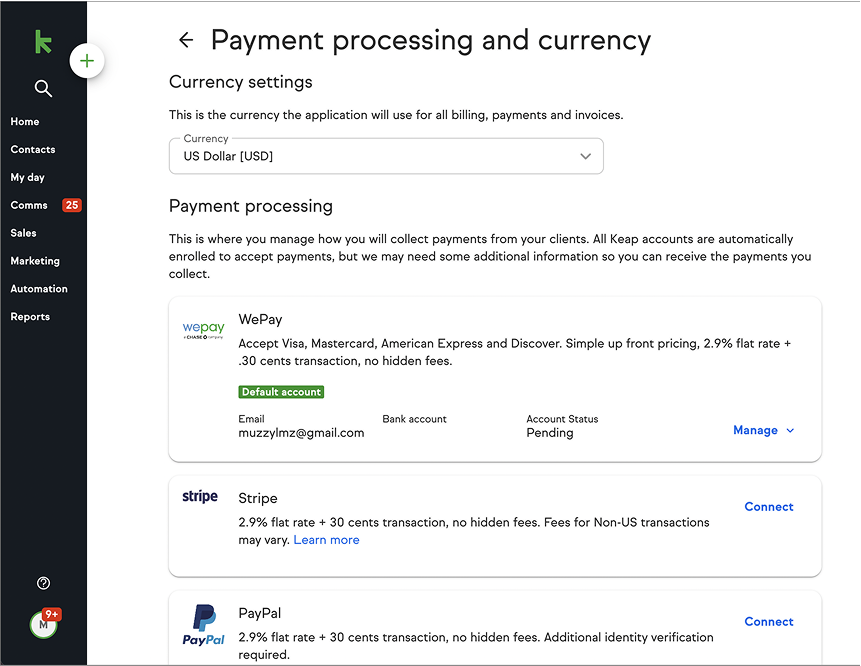
The payment processing page merchants saw before Keap Pay.
 1234
It said Keap “may need some additional information” without saying what or why.
The page set merchants up on the processor that was shutting down.
A small “Pending” and an empty bank account field did not tell merchants if they could get paid.
WePay, Stripe, and PayPal had the same weight and almost the same pricing line, so nothing said which one to pick.
Small businesses with 5 to 25 employees, making $250K to $2M a year in sales.
The payment tools built into their CRM lacked features and support. WePay closing made them nervous, and payment friction was already hurting retention and growth.
Research
I started with stakeholder interviews and product analytics, benchmarked five competitors, led two cross-functional workshops, and interviewed ten small business owners.
Move to Stripe or build our own? Before anyone picked, I helped the team line up priorities and constraints.
Merchants ran a lot of payments through Keap, but Keap earned a small share of that revenue in 2023 and 2024. Only about 25% of customers used payments, and payments felt disconnected and hard to track.
They left gaps in integration, pricing clarity, and automation. Those gaps shaped how we positioned Keap Pay.
Together we defined the MVP scope and core user flows, and agreed on the long term direction and go to market plan.
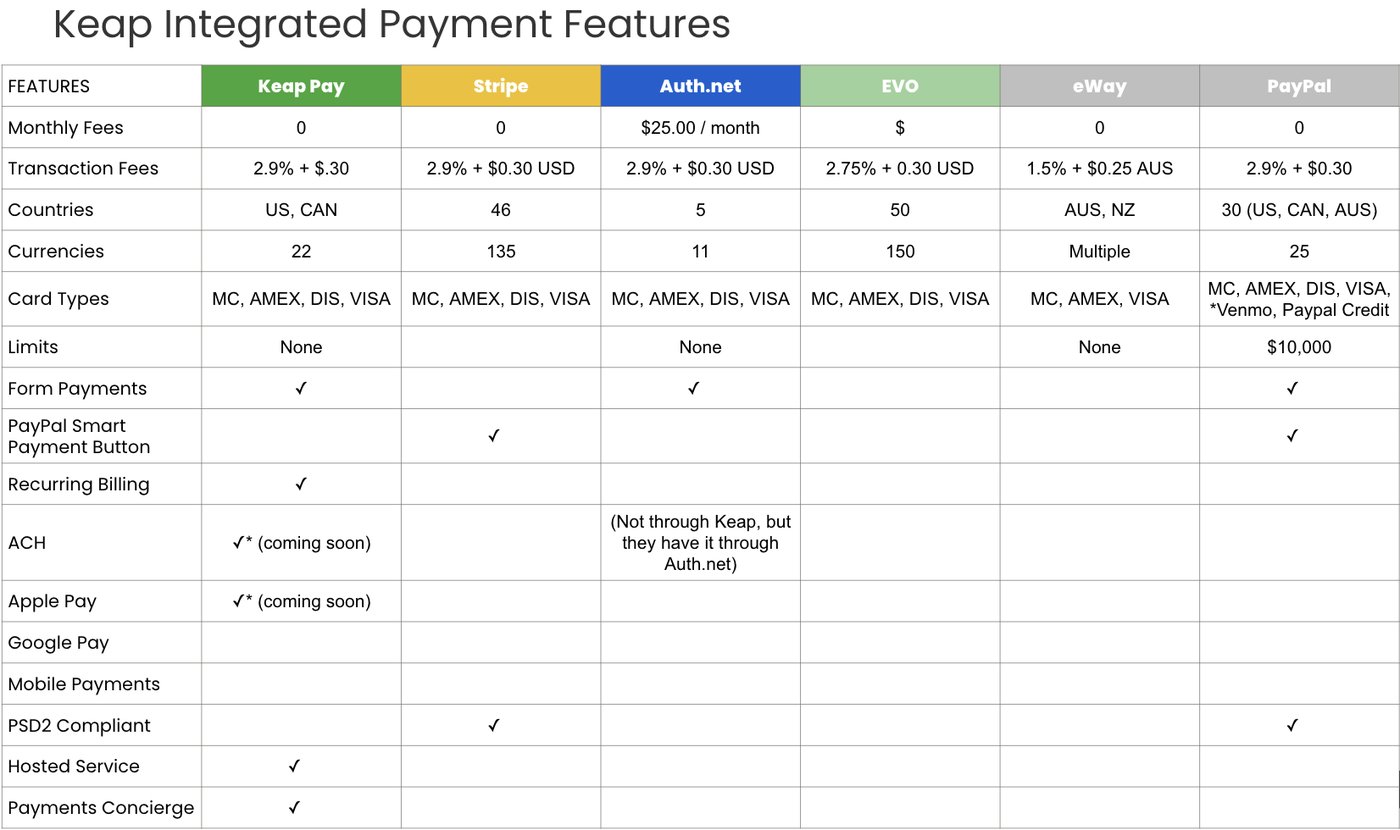
I compared providers on fees, compliance, recurring billing, and support to find where an integrated experience could add value.
I ran a design studio with product, engineering, and payments. We sketched, presented, and voted, and agreed on what onboarding, migration, and payment visibility had to do.
I talked with ten small business owners who used WePay. Questions I asked:
What we heard. Owners needed confidence during setup, and every one of them asked some version of the same question: when will the money arrive? Trust and transparency mattered most.
The questionHow might we move merchants from WePay to Keap Pay with as little friction as possible, while they keep trust and control?
Give merchants confidence during setup, and one clear place to see where their money is.
Process
KYC rules and a new provider API shaped the work. I focused on clear progress, familiar payment patterns, and visible payout status.
Business identity and security cues sit next to sensitive payment fields.
Verification is split into small steps, and the flow says what transfers from WePay, so merchants never enter the same thing twice.
Payments and payouts live in one view, so merchants can see the status of their money.
We split the work into two phases so WePay merchants could move first. After Thryv bought Keap, I sketched a third.
WePay merchants
Authorize.net users and new users
Thryv payment agents, concept
More merchants finish setup, and they take their first payment sooner.
Higher total payment volume, revenue, and attach rate.
Fewer onboarding tickets and errors.
More WePay merchants migrated, and Keap owning the payment journey end to end.
The Keap design system had no payment patterns, so I built and documented them: hosted card and bank transfer forms, validation states, status bars, tabs, and review tables.
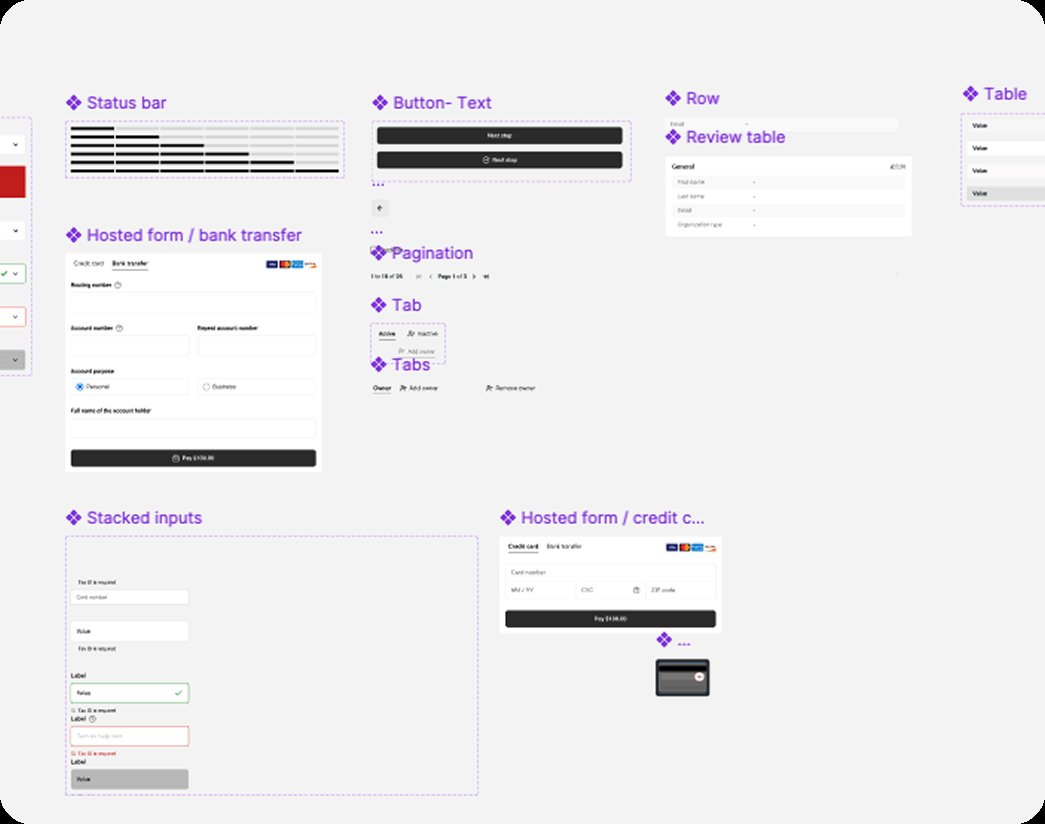
Shared by onboarding, payment forms, and reporting, so every payment screen behaves the same way.
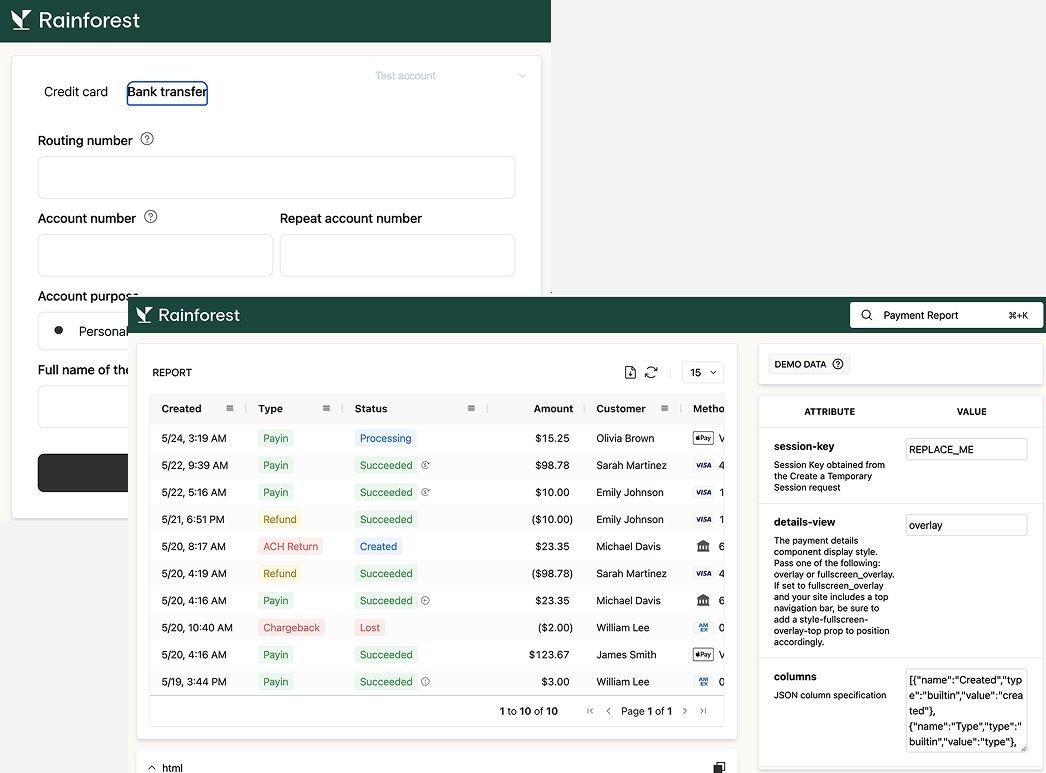
Custom components wrap the Rainforest hosted forms, with the same validation for card and bank transfers, so the provider feels native to Keap.
Product Design
Setup, collecting payments, and reporting were designed together, with familiar Keap patterns around the provider integration.
Where merchants choose how to get paid, before and after the redesign.
WePay, Stripe, and PayPal sat in one list with the same weight, so nothing said which one to pick.
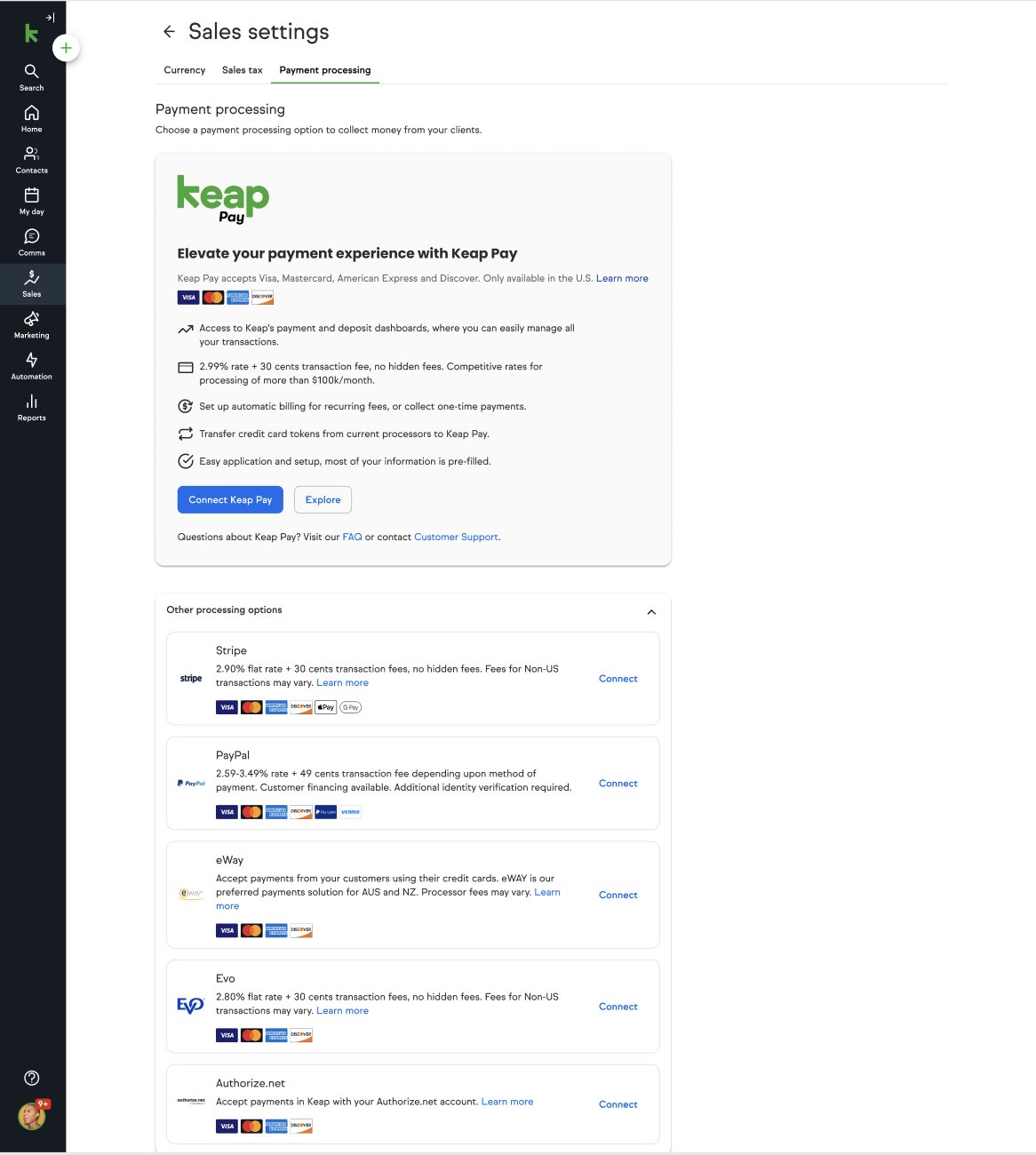
Settings open with Keap Pay, its rates, and what merchants get. Other processors are still there, folded below.
Before and after user testing.
Testing feedback from 7 merchants on the first version
Onboarding was straightforward.
“There’s so much text on the sign-up page… it’s overwhelming.”
Cut the content down and split the page into short sections.
The first version put every feature on the page at once.
The final page tells the story in clear sections, starting with what merchants care about most, like no hidden fees.
A payment dashboard shows the status of every payment, and a deposit dashboard shows what landed in the bank, fees included, so merchants always know where their money is.
Payments start with invoices, so I cleaned up the invoices dashboard too.
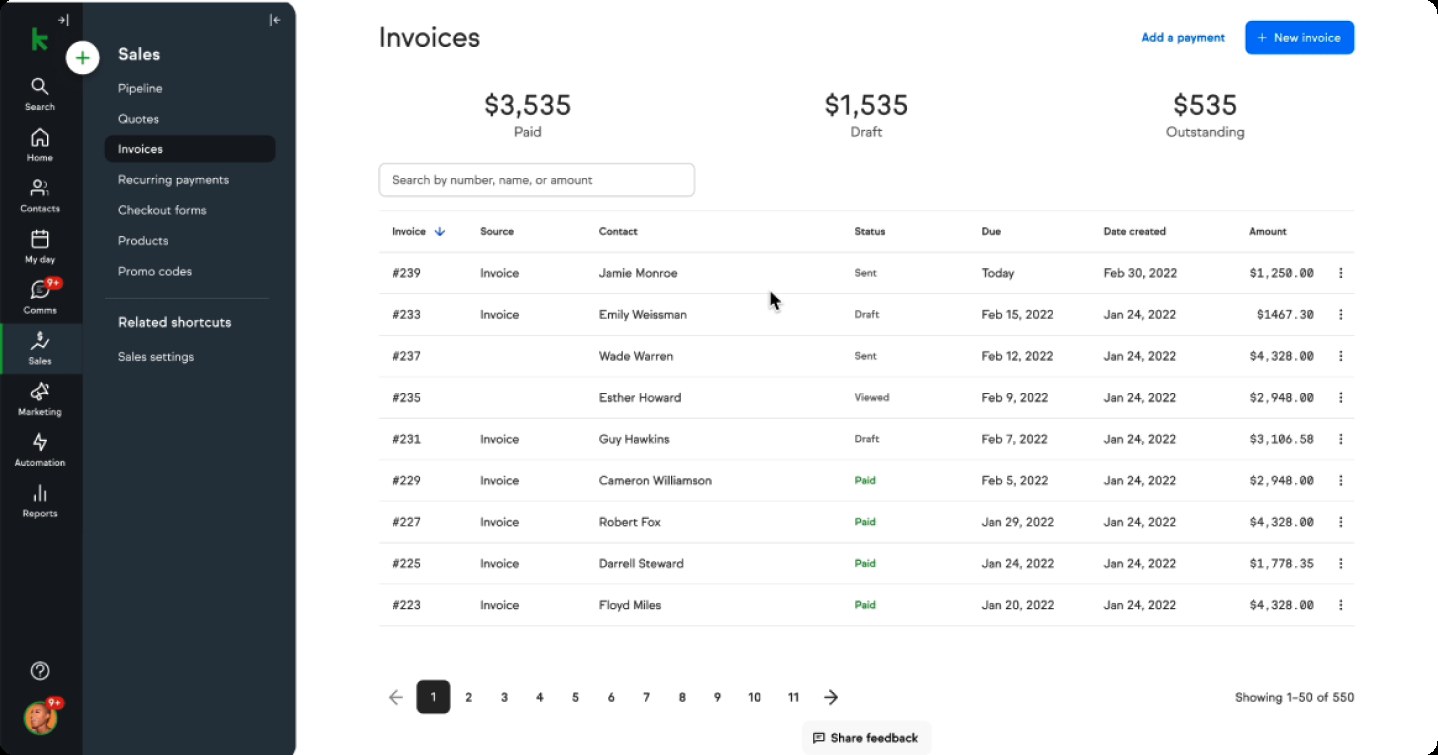
Three numbers sat above a long list, with no quick way to filter or see the overall total.
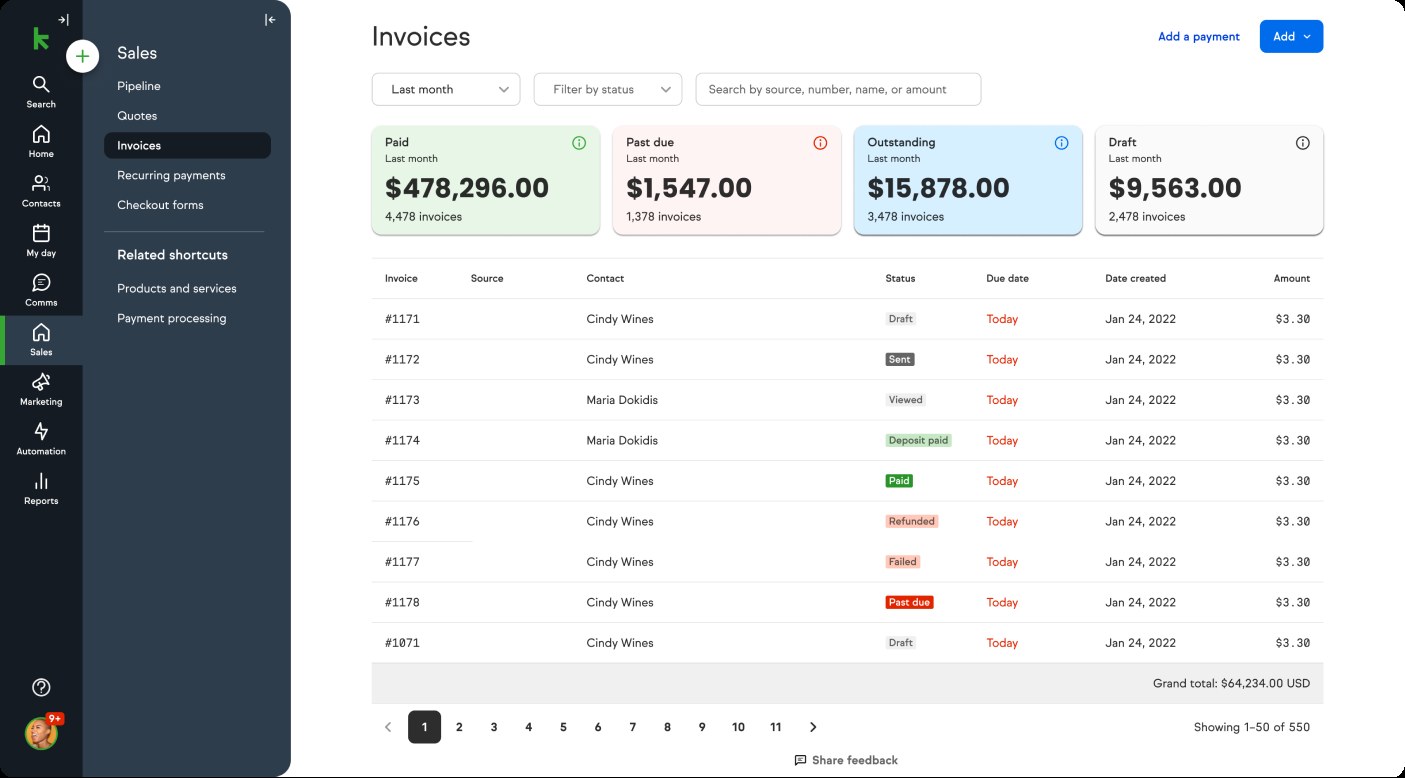
Status cards for paid, past due, outstanding, and draft work as quick filters. Status tags use the updated design system, and a grand total sits at the bottom.
Results
Moderated task-based sessions shaped the design through delivery. These launch results reflect the whole team’s work.
Processed through the new system.
Of affected WePay merchants, within the four month deadline.
Total payment volume growth within six months.
Revenue lift from payments after launch.
Above the 65 to 70 typical for payment products.
Two questions stayed open after launch: when will the money land, and what happens when a payment fails. That is where the next phase starts.
After the acquisition
Thryv bought Keap in October 2024, and Keap Pay moved into the Thryv platform. Getting paid was now the easy part. The hard part was follow up: late invoices, expired cards, disputes. This concept adds agents to the Thryv Payments page. They find the problem, suggest a fix and say why, and follow up only as far as the owner allows. Everything they use already exists in the payment provider, like payout timing, card updates, and chargeback reports.
1. Detect
The Keap Pay payment and deposit dashboards stay as they were. On top, the Overview shows three action items with the reason for each, and everything the agents already handled moves to Agent activity.
2. Recommend
Opening an item shows what happened, the fix, and why it should work, using this client’s own history. The email uses the Selected AI Response style from Thryv Reputation. A timeline shows which step waits for the owner.
3. Follow up
Suggest, Ask first, or Auto. Every agent starts on Ask first. The Collections agent uses the reminder emails owners already set up in Thryv Automations, so emails are edited in one place. Its page shows every client in follow up, which step they are on, and what needs approval.
The rules behind it
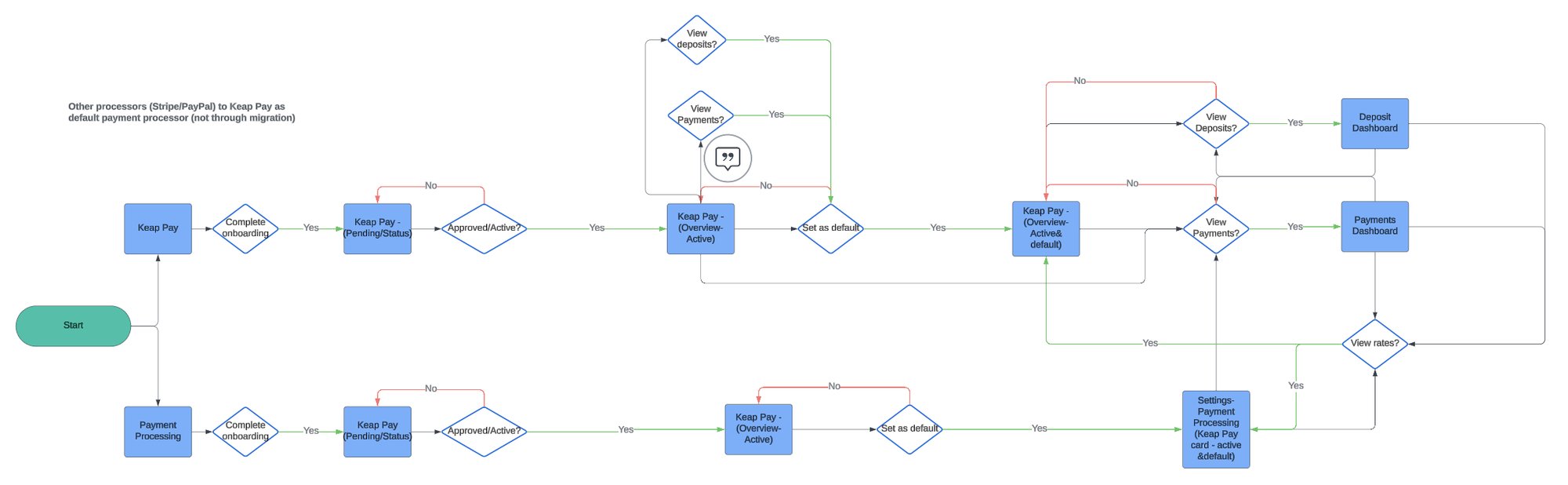
Before any screen, I mapped what the collections agent may do alone and where a person always decides. The merchant never sees this map. They see the result: one client’s timeline, with the step that waits for them.